The Knysna Estuary Project
Wastewater infrastructure failures feed directly into sewage contamination — which affects the health of Knysna Estuary.
A healthy estuary isn't just a holiday amenity
Most public conversation about the estuary's water quality is really a question about recreation — is it safe to swim today, will the boat traffic be fine over the holidays. That framing quietly assumes the estuary is optional: something a visitor can simply avoid on a bad day by choosing a pool instead. For a lot of Knysna, it isn't optional.
Knysna Estuary has long supported local subsistence and small-scale fishing — residents fishing, and harvesting mussels and oysters directly from the estuary for food, not sport. South Africa's own 1996 water quality guidelines formally recognise this as a distinct exposure category (angling and bait-collection under "intermediate-contact recreation"), separate from swimming. The distinction matters because the risk isn't the same. A swimmer who hears the water is contaminated can go elsewhere. Someone gathering mussels or oysters for the week's meals from that same water usually can't opt out the way a visitor can — and shellfish, as filter feeders, concentrate whatever bacteria is in the water around them, meaning contaminated food can carry a materially higher exposure than a swim ever would.
This isn't abstract. The water-quality data further down this page shows the worst E.coli readings on record aren't at Knysna's resort beaches — they're at stormwater culverts and residential-adjacent sites like Salt River, places nobody markets to tourists but where people live, fish and let their children play. The contamination burden and the amenity most associated with the estuary fall on different people.
Why wastewater infrastructure matters here
That contamination doesn't come from nowhere. Sewer pump-station failures, blockages and overflows are among the most common infrastructure problems documented in KIG's Wastewater intervention archive. Left unresolved, these failures introduce contamination into waterways that ultimately drain into Knysna Estuary, directly affecting the water that residents, fishers and visitors alike depend on.
A rare, fragile system under real international attention
A narrow margin for error
Knysna Estuary is a largely enclosed lagoon system with a single, constricted tidal opening (the Knysna Heads). That geography is exactly what makes it ecologically rich — and exactly what makes it vulnerable: pollutants and nutrient loading that enter the system don't flush out quickly. Contamination from a single failed sewer line or pump station doesn't just pass through and disappear; it lingers, accumulates and compounds with whatever came before it — and with it, so does the risk to everyone drawing food or recreation from the water.
The estuary is widely documented as having the highest recorded biodiversity of any estuary in South Africa. That status is not a permanent guarantee — it reflects a system that has, so far, absorbed decades of growth, aging infrastructure and periodic disasters (including the 2017 Knysna fires) without collapsing. Every wastewater failure left unrepaired spends down that resilience.
A global spotlight on a local system
That fragility is precisely why the estuary already sits inside international conservation frameworks. The Knysna seahorse (Hippocampus capensis) survives naturally in only a handful of Southern Cape estuaries on Earth — Knysna's own water quality is not a local planning matter for that species, it is existential. The surrounding Knysna Sand Fynbos is independently classified as critically endangered, with less than 10% of its historical extent remaining.
That combination — international attention plus a genuinely narrow ecological margin, on top of the direct human cost above — is why KIG treats routine infrastructure work here differently. A blocked pump station elsewhere is a maintenance issue. A blocked pump station feeding into Knysna Estuary is a contribution, however small, to the decline of a globally recognised, already-stressed ecosystem that real people rely on to eat.
Knysna's international conservation connections
Knysna has a genuine international conservation presence — more often recognised through its species, ecosystems and protected areas than as a standalone destination, but connected all the same to IUCN, UNESCO, WWF, Project Seahorse and other global biodiversity frameworks.
| Organisation | How Knysna appears |
|---|---|
 | The Knysna seahorse is assessed on the IUCN Red List. IUCN also hosts international research and conservation networks involving Knysna-based scientists. |
 | International seahorse conservation research includes the Knysna seahorse (Hippocampus capensis), an endangered species found in the Knysna estuary. |
 | WWF South Africa is involved in protecting Knysna Sand Fynbos, a critically endangered vegetation type. |
 | Knysna is part of the Cape Floral Region, a UNESCO World Heritage Site. |
 | Knysna's estuarine and wetland conservation is relevant to international wetland conservation, although Knysna Estuary itself is not a Ramsar site. |
 | Knysna's forests, wetlands and surrounding protected areas fall within the broader international bird-conservation context of the Garden Route and Southern Cape. |
Strongest international examples
Knysna seahorse
Internationally recognised as an endangered species. Its conservation is connected to IUCN assessments and international seahorse research, including work by Project Seahorse and researchers based in Knysna.
Knysna Sand Fynbos
SANParks identifies Knysna Sand Fynbos as critically endangered, and documents collaboration involving WWF-SA, Table Mountain Fund, CapeNature and the Western Heads–Goukamma Conservancy.
Cape Floral Region
Knysna lies within the internationally recognised Cape Floral Region Protected Areas, a UNESCO World Heritage Site — a direct international conservation designation connected to the broader Knysna landscape.
The Estuary Project Charter
This is the scale of problem the Estuary Project Charter exists to address. Adopted as a flagship initiative under KIG's overarching MOU with Knysna Municipality (signed 12 November 2025), the Charter sets out to: identify contamination sources, repair and refurbish critical sewage infrastructure, carry out preventative maintenance, monitor and test water quality, raise community awareness, and establish sustainable long-term funding.
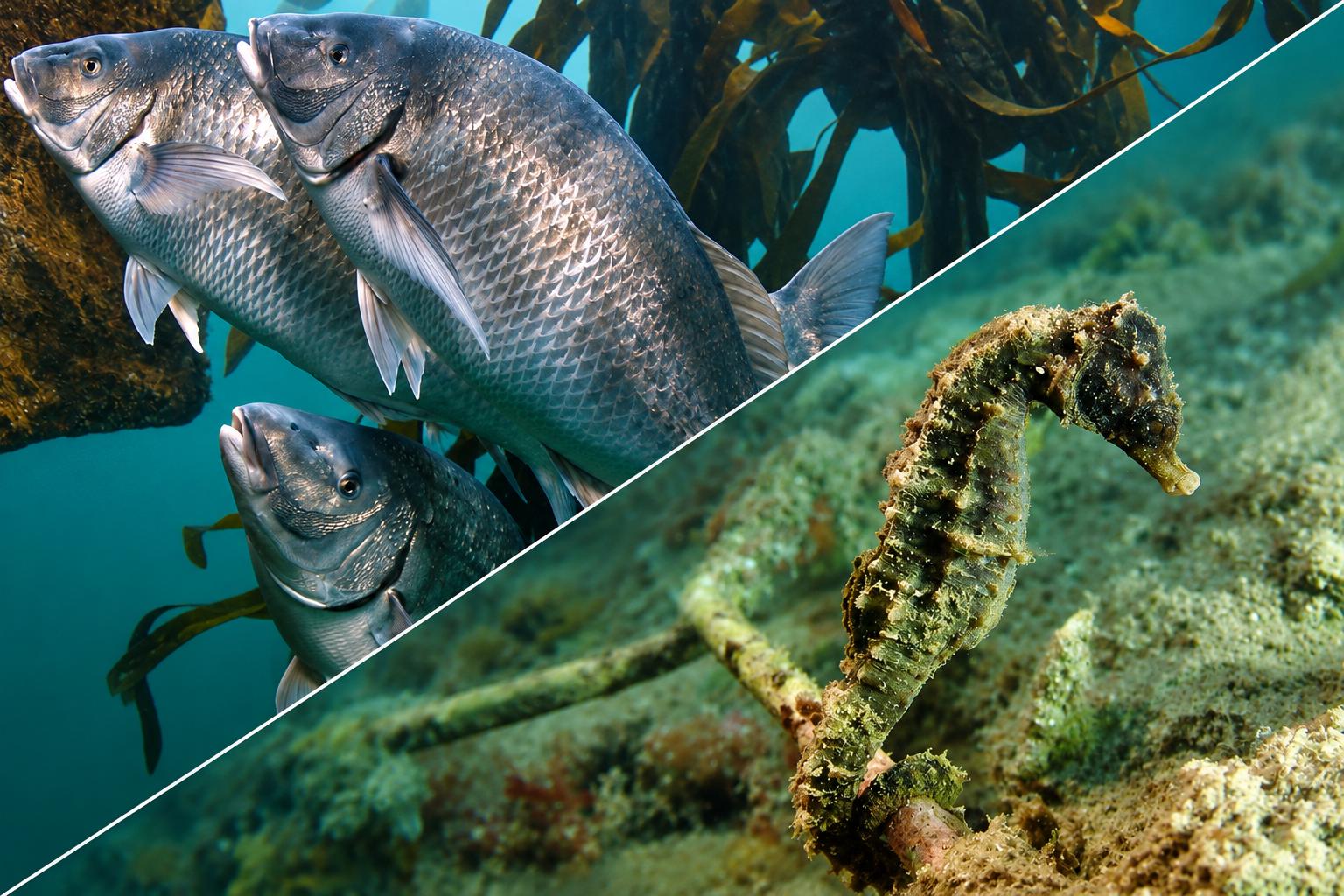
Including a proposed R5m KERF daily water-quality monitor. Source: KIG Estuary Project Charter.
Closing the gap between what's needed and what gets done
Knysna Municipality does not always have the capacity or budget to respond to every infrastructure failure the moment it happens. KIG exists to close that gap — funding, technical expertise and rapid community reporting, applied directly to the failures most likely to harm residents and the estuary.
Knysna Wastewater Treatment Plant
The WWTP's anoxic first phase was overloaded with sludge. KIG helped recommission the screens and drives, restoring full plant operation, and has since funded ongoing technical support because the municipality does not have the resources to operate the plant alone.
Costa Sarda sewerage leak
The main sewer line ruptured at Costa Sarda. Knysna Municipality did not have the capacity or financial resources to facilitate the repair, so KIG funded it directly; B&V Contractors carried out the work.
This isn't occasional — it's the pattern behind KIG's entire intervention record: more than 3500 documented interventions, 124 of them KIG-led or KIG-funded directly, backed by R3 527 149 in confirmed expenditure. The formal Municipal Partnership Agreement with Knysna Municipality (signed 12 November 2025, renewed 1 July 2026) turns this from ad-hoc goodwill into a structured, ongoing partnership — but the underlying reason KIG exists is simple: without it, many of these failures would sit unresolved for longer, with consequences that flow, eventually, into the estuary that families like the ones described above depend on.
Does it work? What the Municipality's own water-quality data shows
Charter commitments and funded repairs are one thing; the Municipality's own testing is where we can actually check whether any of it moves the needle. Knysna Municipality publishes a monthly Estuary Water Quality Update, testing E.coli levels at estuary recreation points and stormwater culverts against a stated guideline of 500 E.coli/100ml for recreational use (250 E.coli/100ml briefly, Dec 2023–Jan 2024). Below is every case in KIG's Intervention Archive where a KIG-funded, KIG-led, or KIG-collaborative repair happened at a location the Municipality also tests — comparing the nearest published reading before the work to the nearest one after it.
| Site | KIG action | Nearest reading before | Nearest reading after | Change |
|---|
Trends over time, by site
E.coli/100ml, log scale (values range from 0 to over 3 million). A "No Growth" reading is plotted flat at the previous level rather than dropping to zero — a single clean sample doesn't mean a contamination source is fixed. Click a site in the legend to isolate its line; click it again to show all. Click any point on the chart to open that month's source report.
Estuary recreation points
Stormwater culverts
The full water-quality record, by site
Every reading from every published report since January 2024, E.coli/100ml:
- NG = No Growth (below detection)
- — = that site wasn't tested that month
- Red = flagged non-compliant by the Municipality's own report
- Click a month to open that month's source report (PDF)
- Hover a reading for the exact figure
Source: Knysna Municipality, Estuary Water Quality Update. Not every month has a published report; monitored sites changed over time (Costa Sarda and Lake Brenton added, The Point and Ashmead dropped, from Aug 2024). Guideline was briefly 250 E.coli/100ml (Dec 2023–Jan 2024) rather than the usual 500.
The estuary doesn't distinguish between visitors and residents. Neither should the response.
A globally significant ecosystem, a community that fishes it for food as well as enjoys it for leisure, and infrastructure that keeps failing faster than one-off repairs can fix it — that's the case for sustained, ongoing investment, not just for isolated crisis response.